
CELEBRITY
🚨 TRUMP-ILHAN OMAR SHOWDOWN EXPLODES AS FEDERAL INVESTIGATION TAKES ANOTHER DRAMATIC TURN: After Trump Repeatedly Floated Revoking the Minnesota Democrat’s U.S. Citizenship and Deporting Her, a Judge Signals That Key Records Behind the FBI-Style Federal Search of Her Washington Home Could Soon Become Public — Omar Denounces the Investigation as Political Intimidation, While Americans Demand Answers: WHAT WILL THE SEALED DOCUMENTS REVEAL?

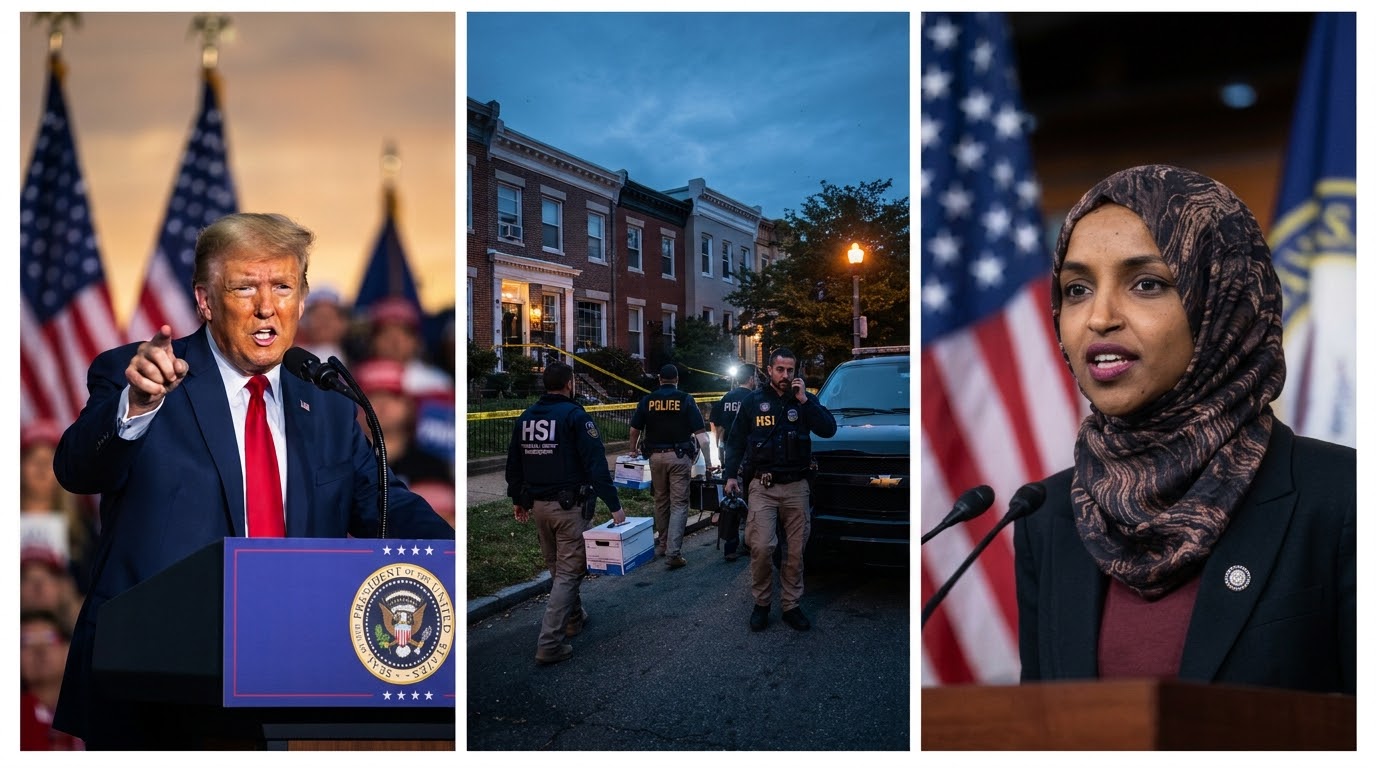
Federal Judge Signals Partial Unsealing of Records Behind Search of Rep. Ilhan Omar’s Washington Home
A high-stakes legal and political clash between the Trump administration and Democratic Rep. Ilhan Omar is entering a pivotal phase as a federal judge prepares to release portions of the court records behind last month’s federal search of the Minnesota congresswoman’s Washington, D.C., residence.
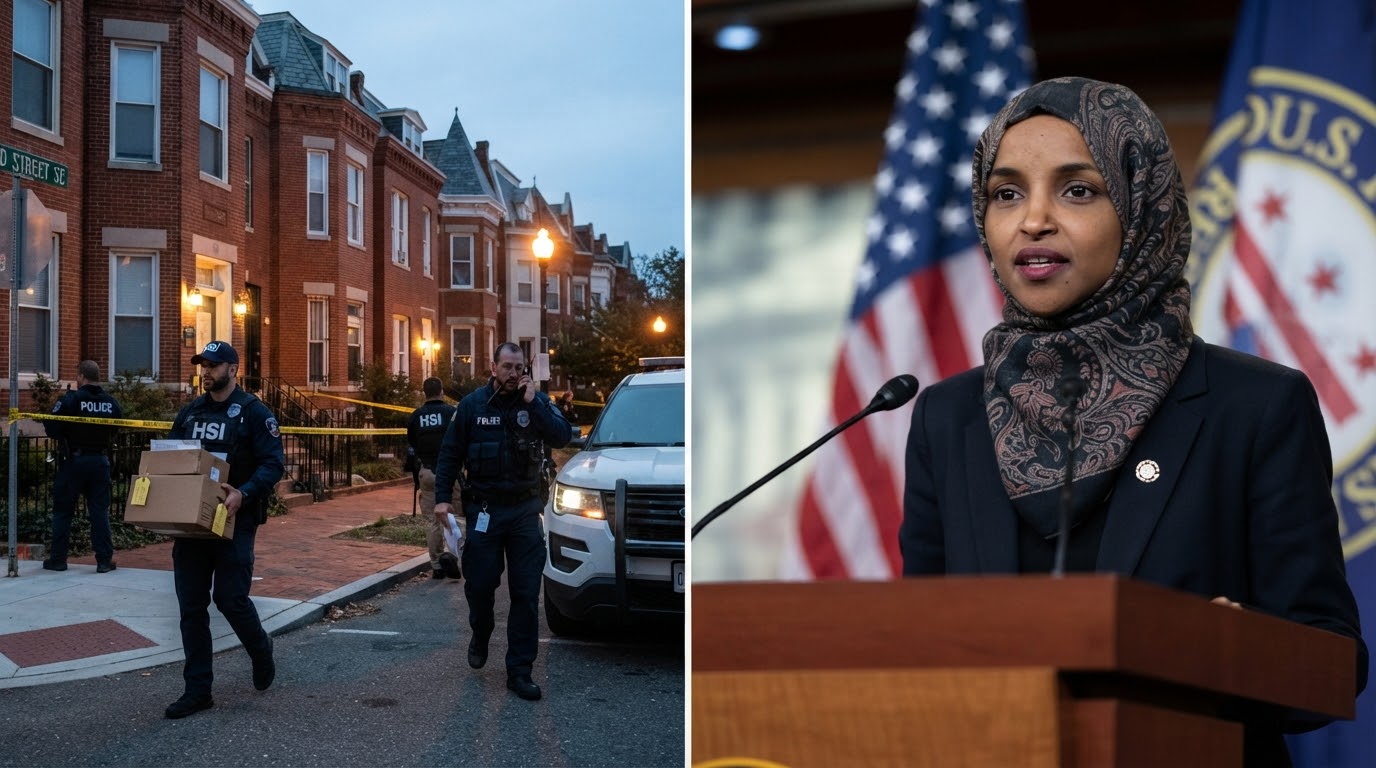
Chief U.S. District Judge James Boasberg ruled following a hearing that while the central 67-page search warrant affidavit will remain sealed for now, other docket filings tied to the October 12 search could be made public with redactions as early as Monday evening.
The move comes in response to a legal push by a coalition of 15 major news organizations arguing that the public has a First Amendment right to understand why federal agents raided the home of a sitting member of Congress.
The Search and the Administration’s Rhetoric
On October 12—roughly three weeks before the November midterm elections, in which Omar handily won re-election—as many as 25 Homeland Security Investigations (HSI) agents executed a court-authorized search of Omar’s Washington home. According to Omar and court reporting, agents spent hours inside the residence and seized 17 items, including cell phones, a laptop, notebooks belonging to her husband, a camera, a passport, and a Somali-language children’s book.
The Justice Department has described the probe as an ongoing federal criminal investigation, reportedly centered on historical immigration paperwork from when Omar entered the United States as a refugee from Somalia before becoming a citizen in 2000. No criminal charges have been filed against Omar, who has flatly denied any wrongdoing.
The investigation has unfolded alongside fierce public attacks from the White House. President Donald Trump has repeatedly accused Omar of immigration fraud, demanded her resignation, and floated the prospect of revoking her U.S. citizenship and deporting her.
Vice President JD Vance and Homeland Security Secretary Markwayne Mullin have also publicly commented on the probe, while border czar Tom Homan has stated that Omar could face denaturalization and deportation if fraud is proven.
Omar Pushes Back Against “Political Intimidation”
Omar has condemned the raid as an unconstitutional effort to “target political enemies and weaponize federal law enforcement,” noting that the pre-election search broke with long-standing informal Justice Department norms against taking overt investigative steps against candidates within 60 days of an election.
In court filings, Omar’s legal team has also accused the Justice Department of violating court-ordered safeguards meant to protect legislative materials, alleging that agents failed to properly notify her or the House’s top legal counsel before the search and initially prevented her from contacting her attorney. The Justice Department has disputed those claims as false.
What the Unsealed Documents Are Likely to Show
During arguments over unsealing the records, Justice Department attorneys urged Judge Boasberg to keep the entire docket under seal, arguing that releasing records before any charging decision could compromise the investigation, harm the reputations of individuals named in the filings, and fuel “public scandal”.
Boasberg pushed back sharply, noting that top administration officials—including Trump, Vance, and Mullin—have already spoken publicly about the nature of the inquiry. However, the judge tempered expectations about what the initial release will contain:
What stays hidden:
The 67-page search warrant affidavit—which lays out the specific evidence and witness statements investigators used to establish probable cause—will remain sealed while the probe is ongoing. Boasberg said releasing it now would be “premature,” though he indicated it will be unsealed at a later date.
What could become public:
The redacted filings slated for release primarily concern constitutional separation-of-powers issues—specifically, how federal investigators handled protections under the U.S. Constitution’s Speech or Debate Clause, which shields members of Congress from executive-branch scrutiny of their legislative work.
While the newly unsealed records are not expected to reveal the underlying evidentiary case or resolve the political firestorm surrounding Omar’s citizenship, they are poised to offer the first official glimpse into the legal battle over how the executive branch justifies and conducts searches targeting political opponents in Congress.
Media organizations will have until November 30 to formally challenge any redactions made by the government.

🚨 TRUMP-ILHAN OMAR SHOWDOWN EXPLODES AS FEDERAL INVESTIGATION TAKES ANOTHER DRAMATIC TURN: After Trump Repeatedly Floated Revoking the Minnesota Democrat’s U.S. Citizenship and Deporting Her, a Judge Signals That Key Records Behind the FBI-Style Federal Search of Her Washington Home Could Soon Become Public — Omar Denounces the Investigation as Political Intimidation, While Americans Demand Answers: WHAT WILL THE SEALED DOCUMENTS REVEAL?

Donald Trump Faces Fierce Backlash After Viral Account Claims Four-President White House Chef Andre Rush Was Fired Following a Heated Kitchen Outburst Over the President’s Irregular Hours and Missed Priorities Towards the American People

JUST IN: Donald Trump Suddenly Collapses and Faints Inside His White House Office Moments After a Disagreement With Aide Natalie Harp, Leaving Everyone in Shock! But What Cameras Captured Him and Natalie Harp Doing Just Seconds Before He Collapsed Has Sparked Serious Concerns, With Many Now Believing It Confirms What Americans Have Suspected All Along

🚨 SECRET VEGAS WEDDING BOMBSHELL! 💍 Miley Cyrus STUNS FANS After Allegedly Marrying Maxx Morando in a Private Las Vegas Ceremony With ZERO AUDIENCE — Five Years of Romance, No Public Spectacle, and One SHOCKING Marriage Revelation That Has Social Media EXPLODING! 🤍🔥

🚨 ROYAL BOMBSHELL! PRINCE HARRY & MEGHAN MARKLE’S SHOCK U.K. RETURN EXPOSES A STUNNING VISA CONTROVERSY! WAS HARRY’S U.S. IMMIGRATION STATUS, GREEN CARD DECISION AND POTENTIAL TAX OBLIGATIONS BEHIND THE MOVE? THE QUESTIONS THE SUSSEXES CAN’T ESCAPE! 👑🔥

🚨 BREAKING: TRUMP REACTS TO FBI CYBER BREACH BOMBSHELL! President Says Hackers’ Reported Infiltration of FBI’s National Crime Information Center Is “NOT GOOD” — Washington Faces Fresh Questions Over Potential Data Exposure as Cybercrime Scandal Sparks Alarm!

Donald Trump, 80, CAUGHT in an Embarrassing Situation During Putin Meeting at the APEC Summit as Cameras Capture a Strange Bulge and What Appears to Be a Leaking Urine Pack! But What Cameras Captured as He Stood Up Has the Internet in ABSOLUTE SHOCK, With Americans Raising Questions About His Health and Calling on Him to RESIGN

ROYAL VARIETY PERFORMANCE DESCENDS INTO CHAOS! King Charles and Queen Camilla Reportedly Left Stunned as Prince Harry and Meghan Allegedly Arrive Uninvited at Royal Albert Hall — Security Called as Hopes of Reconciliation Collapse!

🚨💋 SHOCKING RED-CARPET MOMENT! 😱 MELANIA AND DONALD TRUMP STEAL THE SPOTLIGHT WITH A ROMANTIC KISS AT THE PREMIERE OF HER NEW DOCUMENTARY! ❤️🔥 Their Rare Joint Red-Carpet Appearance Sends Cameras Into A Frenzy — BUT WAIT! 👀 ONLOOKERS NOTICE SOMETHING STRANGE AND TROUBLING ABOUT DONALD TRUMP’S RIGHT HAND! 😳 WHAT EXACTLY CAUGHT EVERYONE’S ATTENTION? 🇺🇸

🚨😳 BREAKING: Meghan Markle SPOTTED Getting CLOSE to a MYSTERY Man — But Everything Changed When Prince Harry Suddenly WALKED IN! 😱 What Happened Next Left Them Both SPEECHLESS, As Shocking Reports Emerge That Harry Is Allegedly Considering DIVORCE…..

🔥🚨 BABY BUMP BOMBSHELL! TAYLOR SWIFT LEAVES THE CMA AWARDS RED CARPET IN UTTER CHAOS AS SHE BURSTS INTO LAUGHTER AND PRESSES HER EAR AGAINST PREGNANT BRITTANY MAHOMES’S BABY BUMP! 😱🤰❤️ PATRICK MAHOMES’S WIFE SHARES AN UNFORGETTABLE MOMENT WITH THE GLOBAL SUPERSTAR — AND FANS CAN’T GET ENOUGH! THIS IS THE SWEETEST RED-CARPET MOMENT OF THE NIGHT! 🔥
